


Common grid sizes
| Grid | Squares per inch | Best for |
|---|---|---|
| 1/4 inch | 4 | General maths, plotting, floor plans |
| 1/5 inch | 5 | Engineering and physics, the US engineering standard |
| 1/8 inch | 8 | Detailed drawings and dense graphs |
| 5 mm | 5.08 | Metric school work and design |
| 1 cm | 2.54 | Young children, large diagrams |
How to choose
Match the grid to the precision you need and to the ruler you will use. A 1/4 inch grid works with an inch ruler; a 5 mm grid works with a metric ruler. If the drawing is dense, use a finer grid so lines can land on exact squares. If a child is drawing, use fewer, larger squares so the diagram stays readable.
Imperial vs metric
Letter paper is usually paired with imperial grids, and A4 with metric grids, but the two are independent: you can print a 5 mm grid on Letter or a 1/4 inch grid on A4. The generator keeps the physical square size the same, so the only difference is how many squares fit on the page.
Printing accuracy
Printer scaling is the usual reason graph paper comes out wrong. Print at Actual size or 100%, not “Fit to page”, and use the ruler check mark to measure a 1 inch or 20 mm line. See how to print graph paper at the exact size, or open the graph paper generator to set the grid directly.
In practice
A science teacher wants one graph per student, but the 5 mm grid is too small for younger classes and the 1 cm grid wastes space for plotting. Choosing the grid by the ruler students actually use keeps measurements consistent across the class.
Common mistakes
| Problem | Usually because | What to do |
|---|---|---|
| Students count the wrong number of squares | Imperial and metric rulers are mixed | Match the grid to the ruler |
| The plot does not fill the page | The grid is too coarse | Use a finer grid for dense data |
| Squares print at different sizes | Each PDF was scaled differently | Print every copy at 100% |
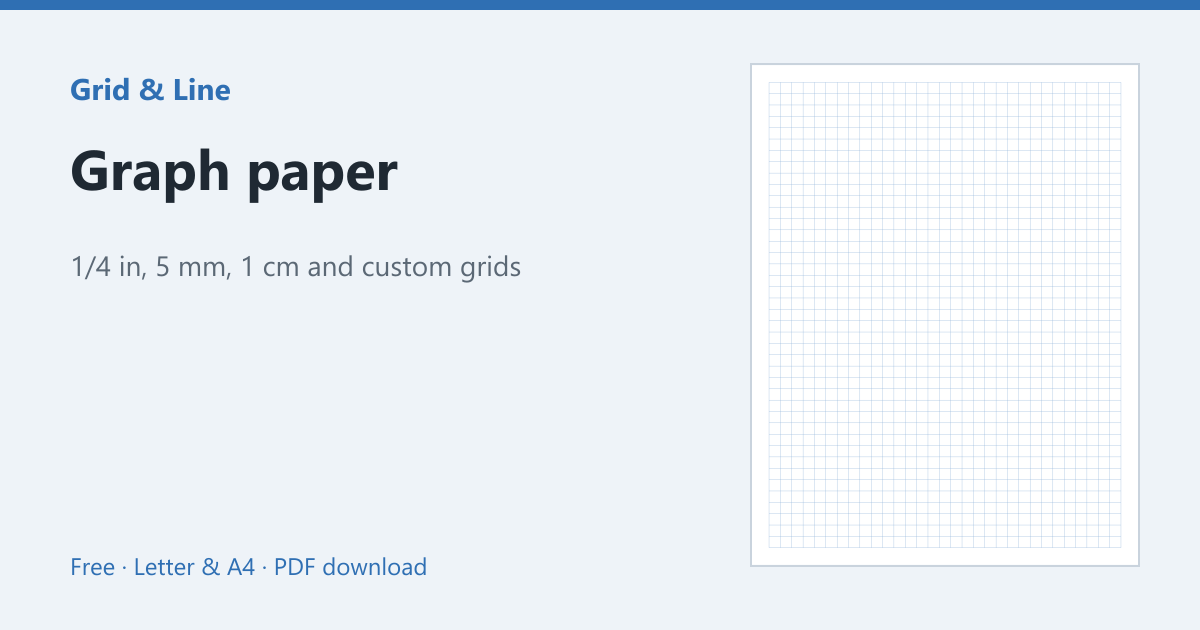 Graph paper
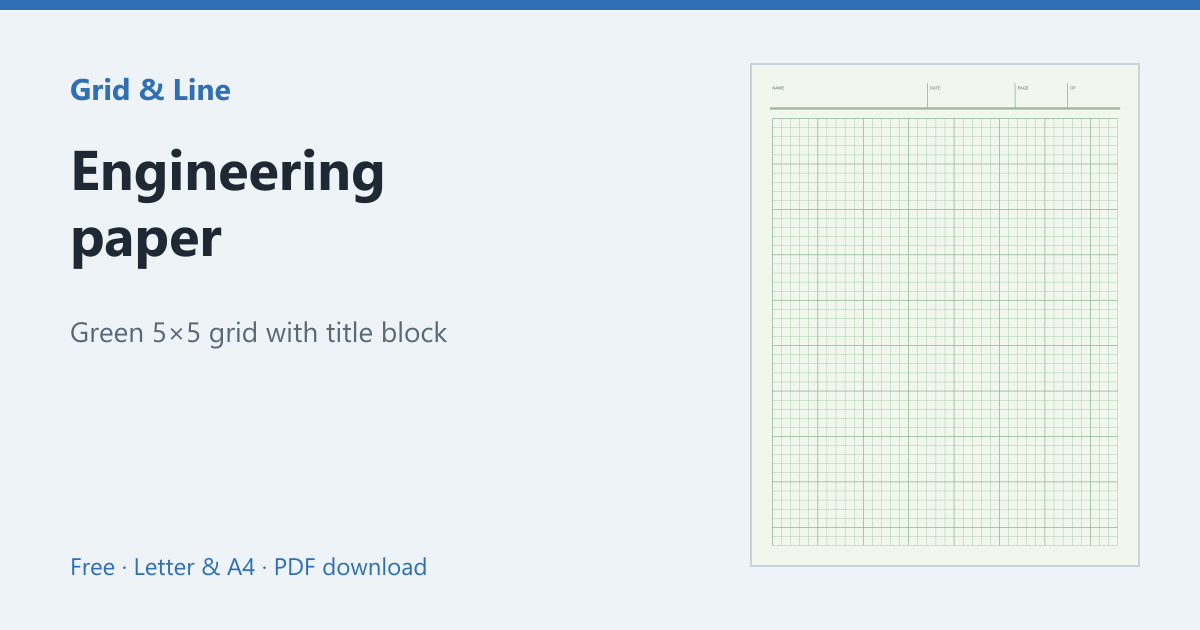 Engineering paper
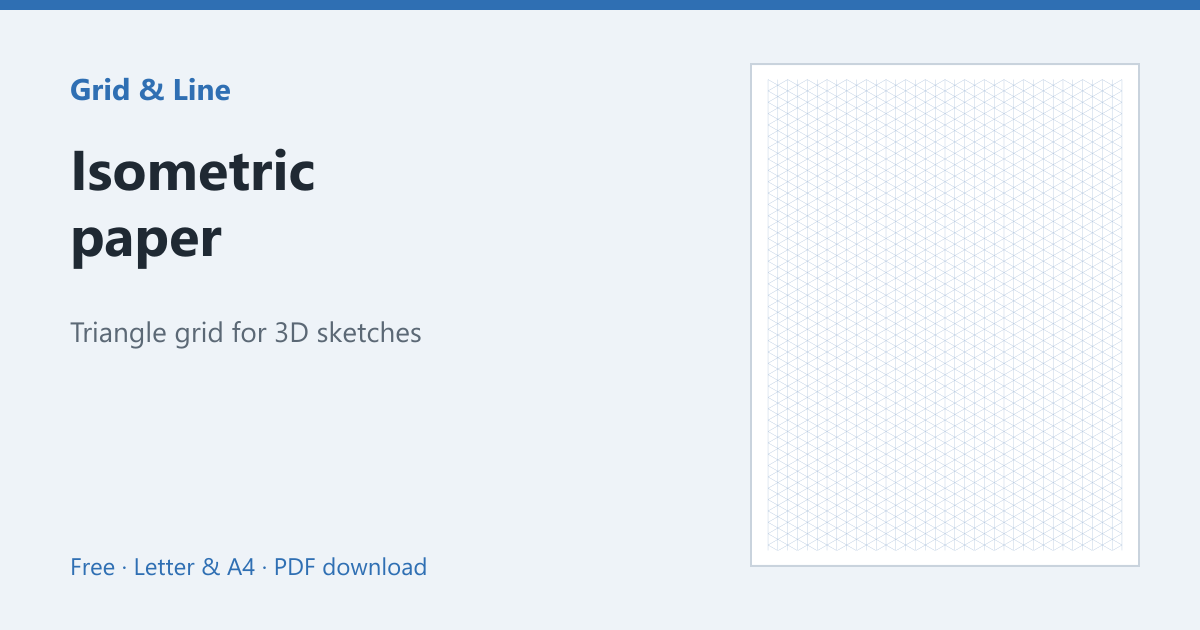 Isometric paper