


Cursive Practice Sheets
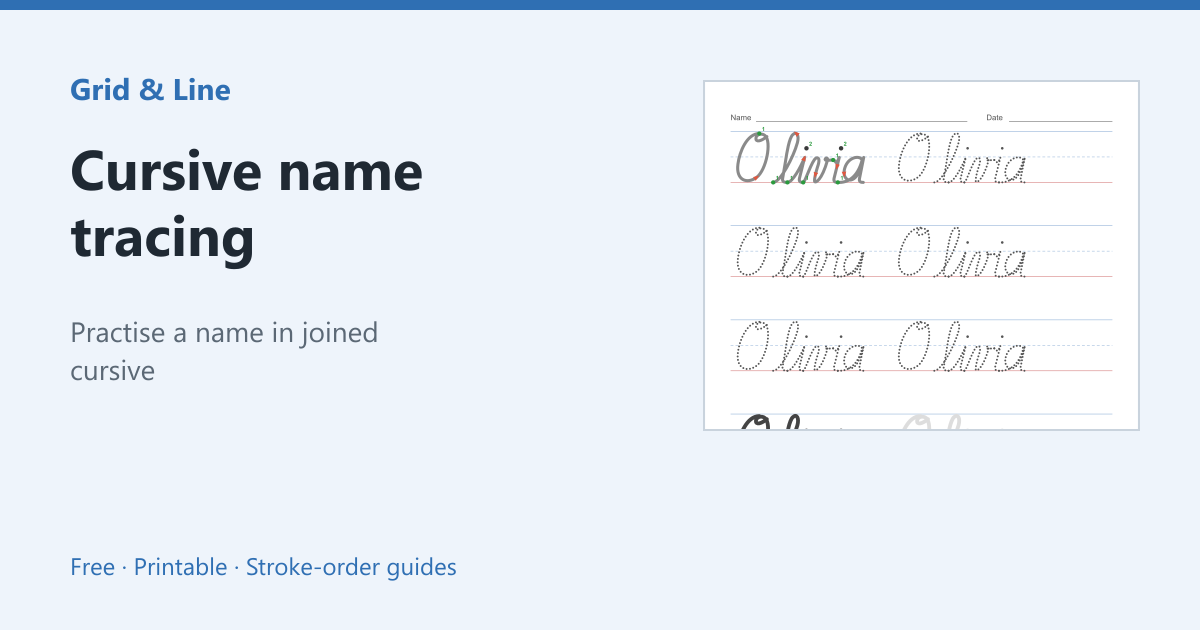
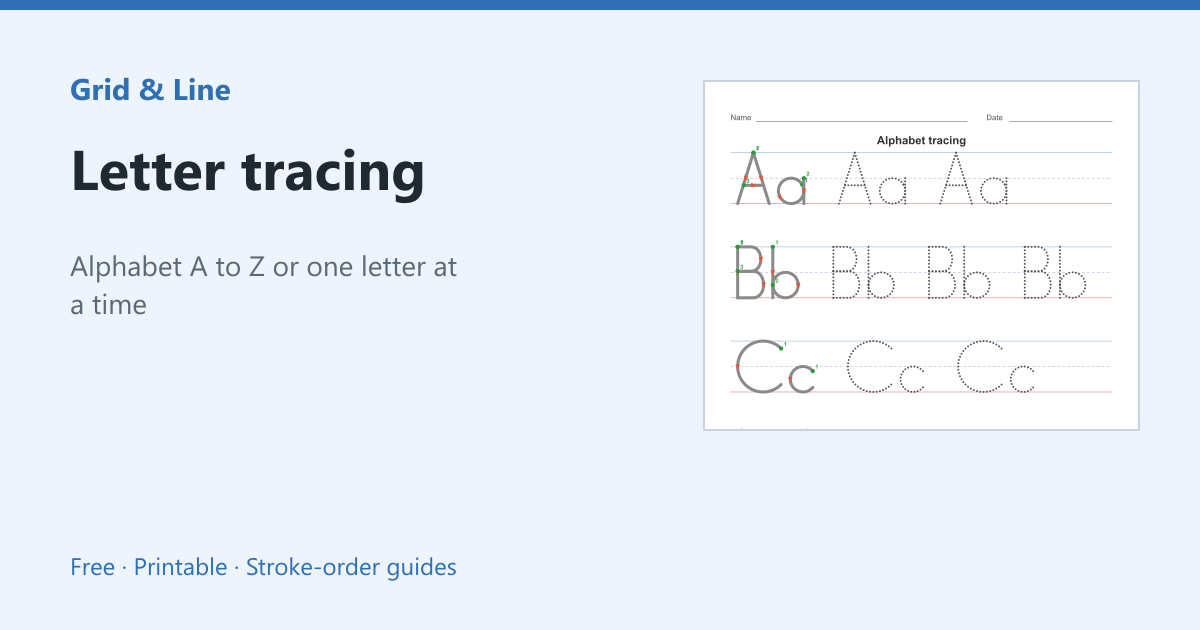
Print the cursive alphabet with a stroke-order model for every letter, or type your own words and practise them in joined cursive.
Page 1 of 5 shown
Print at “Actual size” for the exact line height. Nothing you type leaves your browser.
Cursive lowercase letters
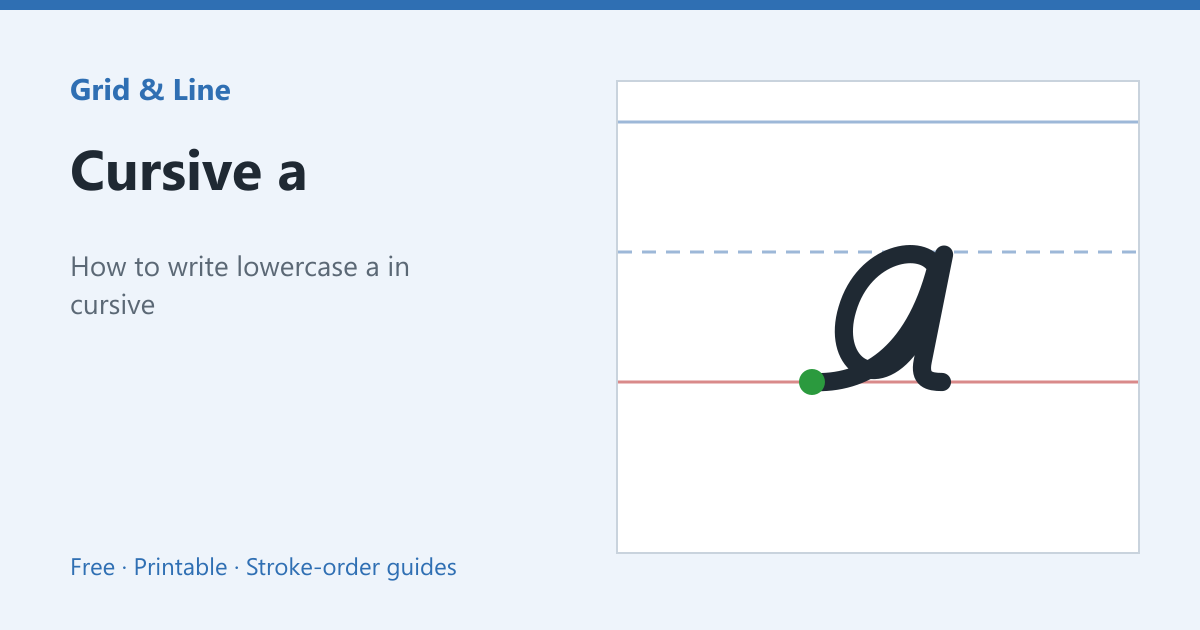
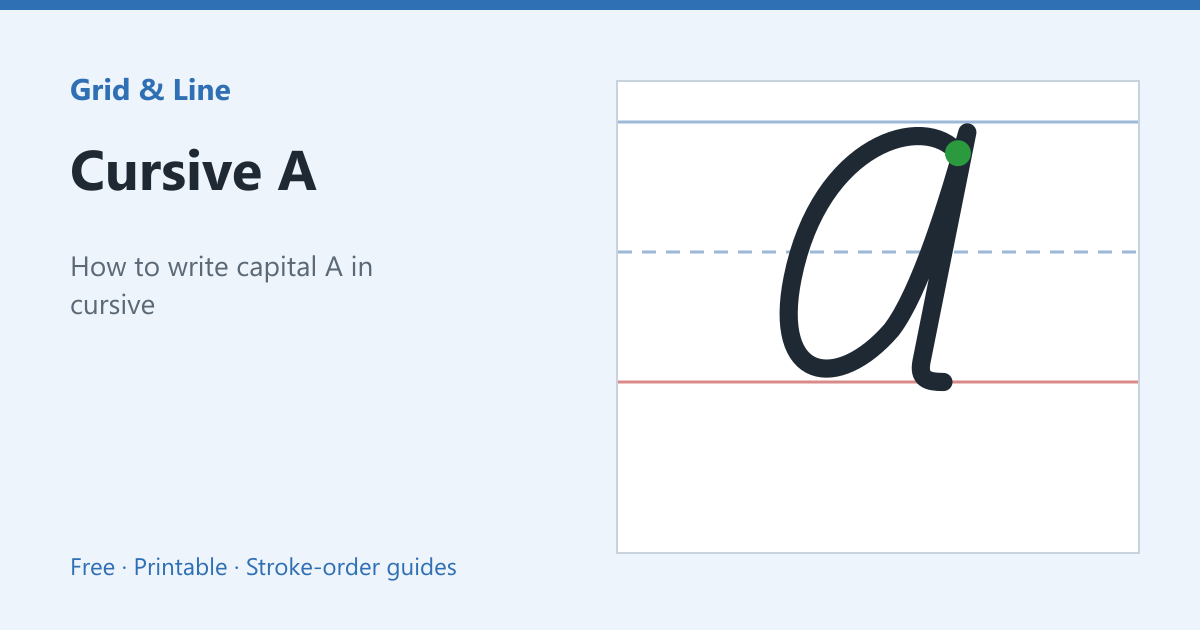
Open a letter to watch it being written.
Cursive capital letters
How to make cursive practice sheets
- Choose what to practise Lowercase letters, capitals, both, or your own words and sentences.
- Pick a style and size Dotted, light gray or rainbow letters; larger sizes for beginners.
- Check the model The first letter of every row shows where to start, stroke order and direction.
- Print Download the PDF. The alphabet runs over several pages, one letter per row.
How to learn cursive
Cursive is easier to learn in families of letters that share the same opening stroke than in ABC order. Most teachers use groups like these:
| Group | Letters | Shared stroke |
|---|---|---|
| Undercurve letters | i, t, u, w, r, s, p, j | A swing up from the baseline |
| Downcurve letters | a, d, g, o, c, q | An oval drawn counterclockwise |
| Loop letters | e, l, h, k, f, b | A loop up to the top line |
| Overcurve letters | n, m, x, y, v, z | A hump over the top |
Start with lowercase. Capitals appear only at the start of names and sentences, so they can come after children can join the most common lowercase letters.
Joining letters
Almost every lowercase letter ends with a stroke that leads into the next one. Four letters, b, o, v and w, end at the midline instead of the baseline, so the letter after them starts with a short line across the middle. Dots on i and j and crosses on t and x are added after the whole word is written, so the pencil stays on the paper. Many capitals (B, D, O, P, S, T, V, W and others) are not joined to the next letter at all.
Tips
- Keep a steady slant: all letters lean slightly to the right by the same amount.
- Practise one family a day, then words that use only those letters (it, tip, wit; add, dog, cod).
- Use larger lines at first and move to small lines once the shapes are automatic.
The letters here use a traditional US cursive with slanted, looped letterforms.
Guides
Frequently asked questions
What is the easiest way to learn cursive?
Learn lowercase letters in groups that start the same way (undercurve, downcurve, loop and overcurve letters), practise joining them in short words, then add capitals.
Which cursive letters do not connect?
All lowercase letters connect. Among capitals, B, D, F, H, I, O, P, Q, S, T, V, W and X are usually not joined to the next letter.
Why do b, o, v and w join differently?
They end at the midline instead of the baseline, so the next letter starts with a short line across the middle.
At what age do children learn cursive?
In the US cursive is usually introduced in second or third grade, around ages 7 to 9.
Can I make cursive worksheets with my own words?
Yes. Choose “My own words or sentences” and type one line per row.
 Cursive name tracing
 Cursive a
 Cursive A
 Letter tracing