


Name Tracing Worksheet Generator
Type your child’s name and get a printable tracing sheet: a stroke-order model, rows of dotted letters, a fading row and space to write it alone.
1 page
Print at “Actual size” for the exact line height. Nothing you type leaves your browser.
How to make a name tracing worksheet
- Type the name Write it the way your child should learn it, usually a capital first letter followed by lowercase letters.
- Pick the style Dotted letters for tracing, light gray for a softer guide, or rainbow letters to trace with matching crayons.
- Choose the letter size Extra large or large for preschool, medium for kindergarten, smaller for first grade.
- Print Download the PDF or print right away. Add a picture box if your child likes to draw a self-portrait.
What is on the worksheet
- A model row. The first copy of the name shows how each letter is formed: a green dot where the pencil starts, numbers for the order of the strokes and a small arrow for the direction.
- Tracing rows. Dotted, light gray or rainbow copies of the name, repeated across each row.
- A fading row. The name gets lighter from left to right until it disappears, so your child gradually writes with less help.
- Empty rows. Handwriting lines with nothing on them, for writing the name independently.
The handwriting lines follow the familiar primary format: a solid top line, a dashed midline and a red baseline. Tall letters touch the top line, small letters reach the dashed midline, and letters like g, j, p, q and y dip below the baseline.
When do children learn to write their name?
Many children start trying to write their name between ages 3 and 5, often beginning with the first letter only. Most kindergarten programs expect children to write their first name by the end of the year. Every child is different: some write their name early, others need lots of tracing first, and that is completely normal.
Tips for name practice
- Capital first, then lowercase. Teach the name as it will be written in school: “Emma”, not “EMMA”. Many children know capitals first, so lowercase letters need the most practice.
- Start at the top. Almost every letter begins at the top line or the midline. The green start dots on the model row show where.
- Keep sessions short. Two or three rows a day is plenty for preschoolers. Stop while it is still fun.
- Check the grip. A short, thick pencil or crayon encourages a tripod grip with the thumb, index and middle finger.
- Make it multisensory. Trace the name with a finger first, then a crayon, then a pencil. Laminate the sheet or slide it into a sheet protector to reuse it with a dry-erase marker.
Choosing a letter size
Bigger is easier for little hands. Use extra large (1.5 inch) or large letters for 3 and 4 year olds, medium (1 inch) for kindergarten and small (3/4 inch) once your child writes comfortably. Long names automatically wrap onto the next line if they do not fit.
Guides
Frequently asked questions
How do I make a name tracing worksheet?
Type the name in the box, choose a tracing style and letter size, then click Download PDF or Print. The sheet is created instantly in your browser.
Should children learn to write their name in capitals or lowercase?
Teach a capital first letter followed by lowercase letters, the way the name is written in school. Writing the whole name in capitals is a habit that is hard to unlearn later.
Can I make name tracing sheets for a whole class?
Yes. Type each name and download a PDF for each one. Every sheet is free with no sign-up, so you can make as many as you need.
What do the green dots and arrows mean?
They show stroke order on the first copy of the name: the green dot is where the pencil starts, the number is the order of the stroke and the arrow shows the direction to move.
Can I use name tracing sheets with a dry-erase marker?
Yes. Print the sheet, laminate it or put it in a sheet protector, and your child can trace with a dry-erase marker and wipe it clean.
Does it work for long names?
Yes. If a name is too long for one line it wraps to the next line. Choose a smaller letter size to keep long names on one line.
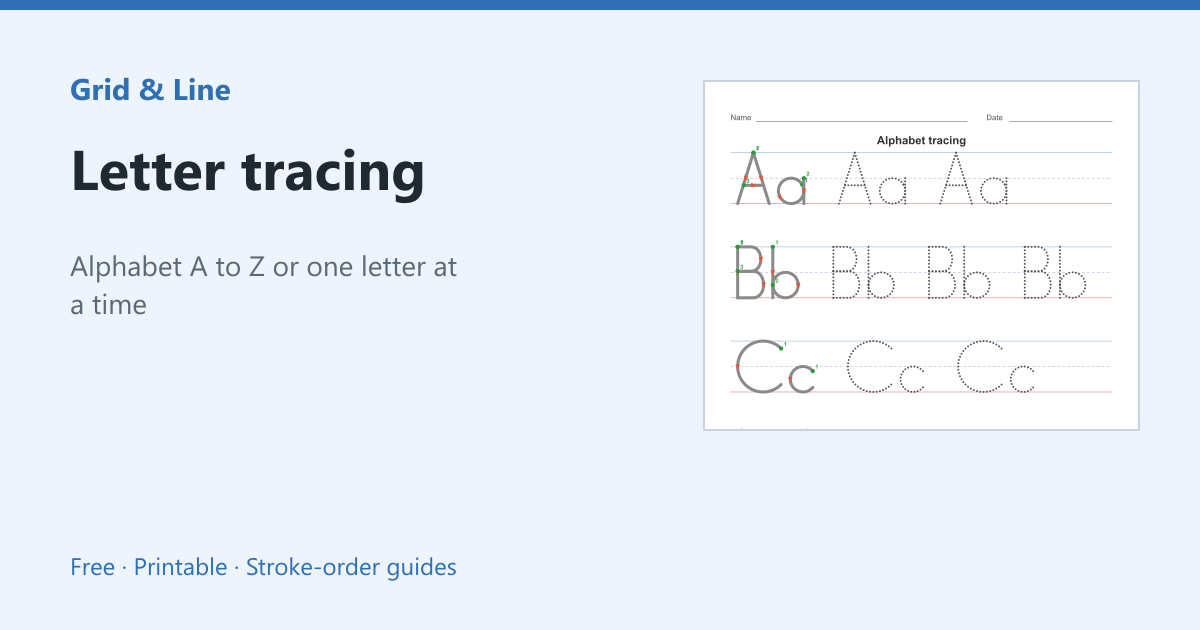 Letter tracing
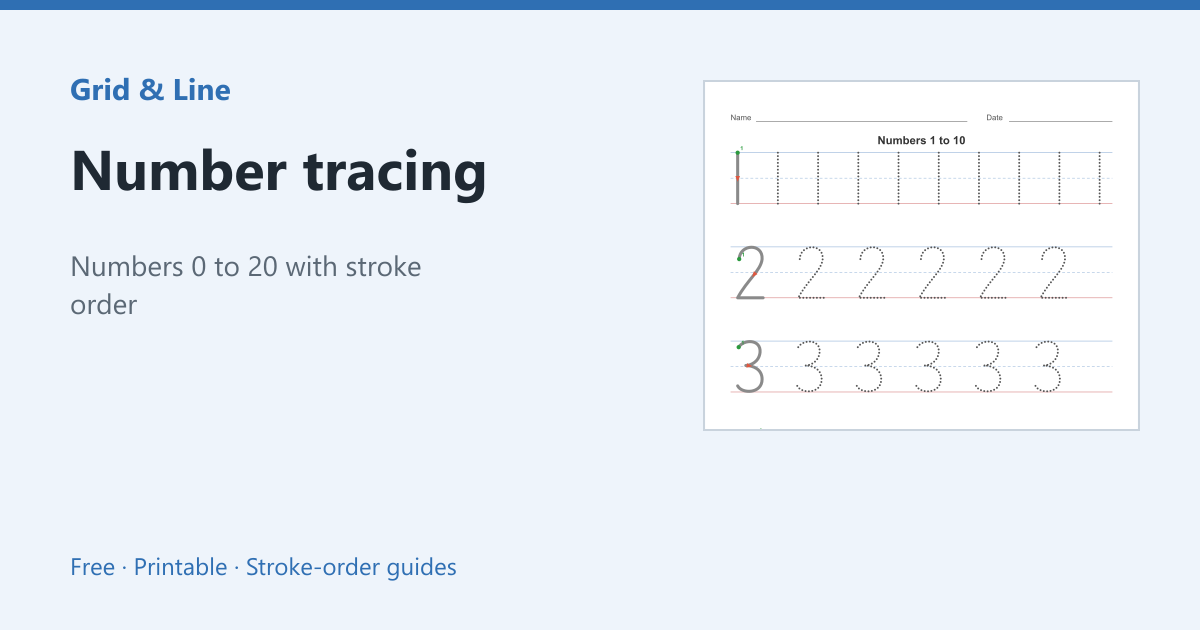 Number tracing
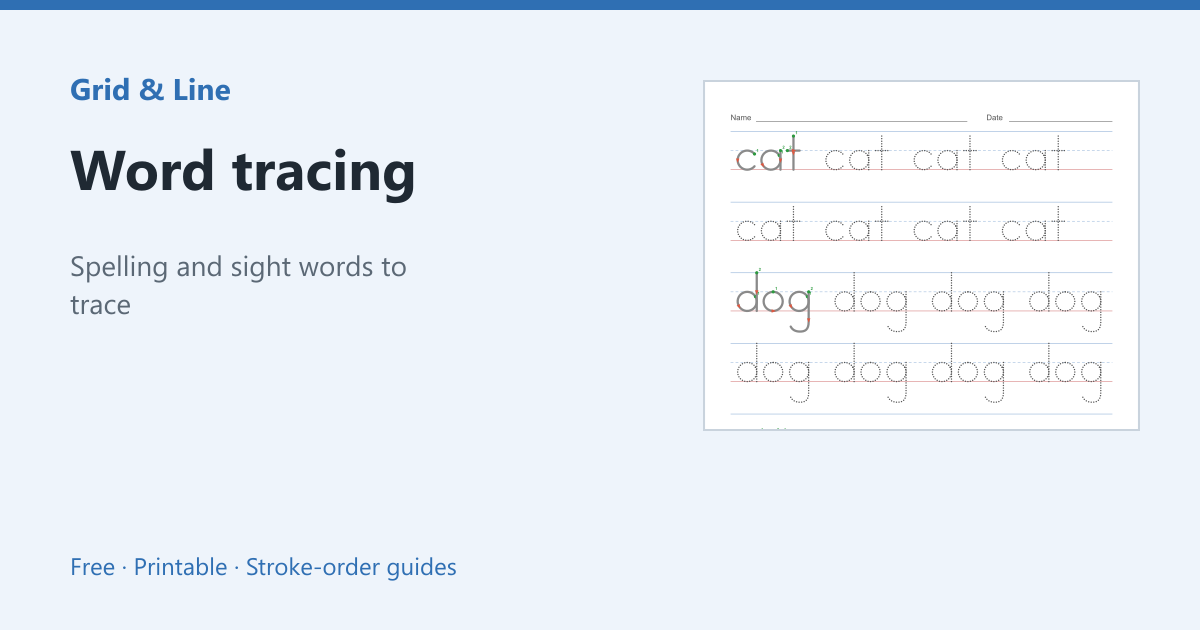 Word tracing
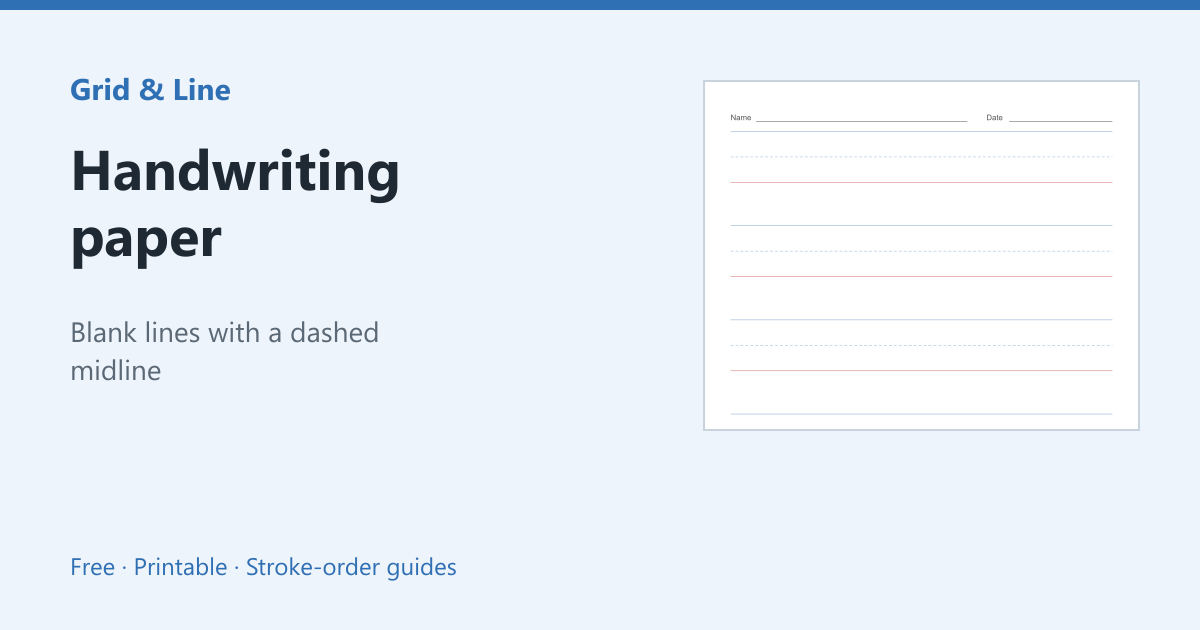 Handwriting paper